

Best Apps to Book Hotels & Villas in Bali: Pros, Cons & My Booking Tips (2027)
When I book accommodation in Bali, I never assume that the first price I see is the best one. I shop around. Always. A villa might be listed on several websites at different prices, while a luxury resort can look expensive until you find a package with breakfast, transfers or other extras included. Finding good value isn’t about booking the cheapest room; it’s about making sure what you’re paying matches what you’re actually getting.
I also book differently depending on the holiday I’m planning. If we’ll be out exploring most days, I want comfortable, well-located accommodation without paying for facilities we won’t use. If the resort itself is the holiday, I’m happy to spend more, but I want time to enjoy the service, the breakfast, the pools and everything else that makes the stay special. That’s why I compare several booking platforms rather than insisting that one app/website is always best.
These are the accommodation booking apps and websites I’d look at for Bali, with the advantages, disadvantages and booking traps worth understanding before you commit. I’ve included Airbnb because it’s an important place to find villas, plus Luxury Escapes for travellers who are patient enough to wait for the right luxury resort package.
Before you book: compare the same stay, not just the headline price
This is the most important part of the process. Choose your dates and make sure every website is showing the same property, room type, number and ages of guests, meal plan and cancellation conditions. Then check the total cost, including taxes, service charges, cleaning fees or other compulsory extras. A room that looks cheaper on the search-results page can be more expensive once everything has been added.
I also look at whether breakfast is included, when payment is taken, whether a deposit is refundable, and what will happen if our plans change. For a family, the difference between a room that officially sleeps four and one that needs an extra bed can be significant. I would never assume that two listings for the same hotel represent the same deal without checking the details. I use this free google sheet to help me compare the different booking sites. It can be really helpful to compare the hotel or villa you are booking side by side.
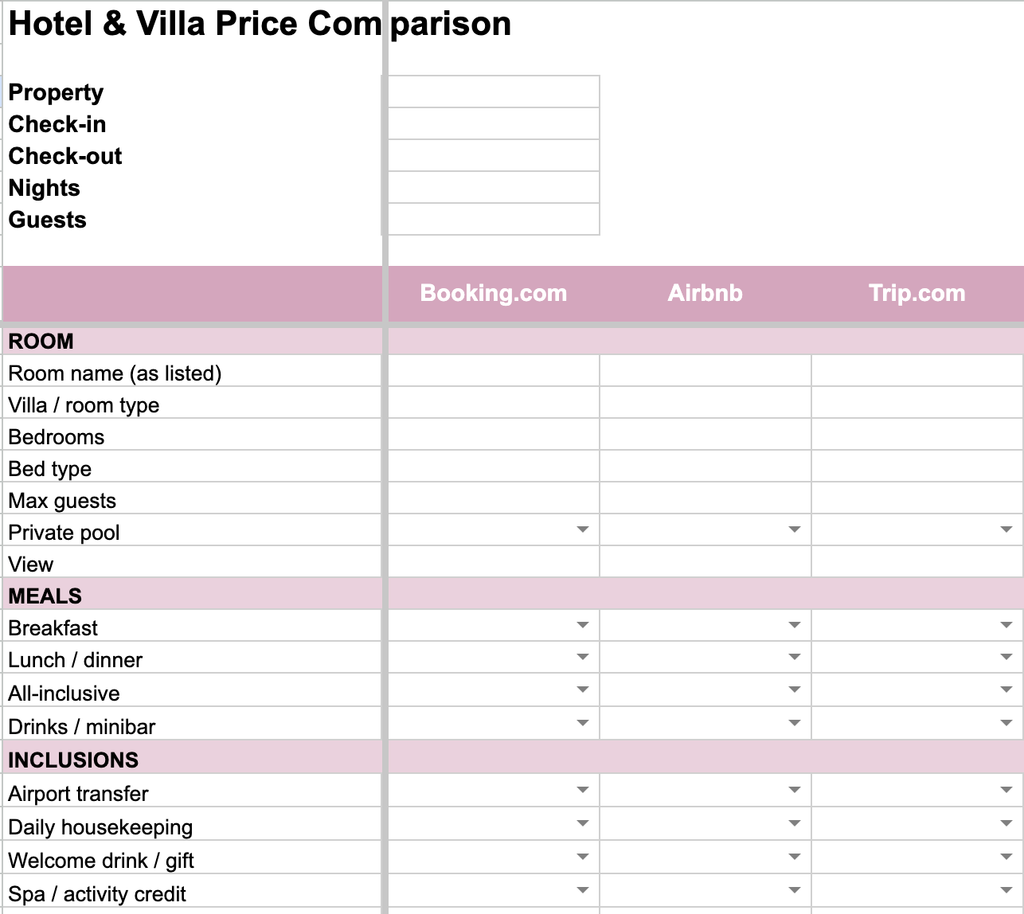

1. Booking.com — my all-round comparison starting point
If you’re comparing resort prices rather than searching for a specific property, you can start with Booking.com and then repeat the same dates on the other platforms below. Check that any link is actually being tracked by Stay22 before treating it as an affiliate link.
Booking.com is a useful place to start because it brings together a broad range of Bali accommodation, from hotels and major resorts to serviced apartments and private villas. I like being able to compare different types of properties in the same area and filter the results by facilities, guest reviews and cancellation options. It’s particularly useful when you’re still deciding whether a resort or villa makes more sense for your trip.
The pros
The breadth of accommodation is its biggest strength, and some listings offer flexible cancellation or payment arrangements. Reviews and the map view are useful for creating a shortlist, especially when you already know which neighbourhood you want to stay in. The Genius programme can also provide eligible account holders with discounts or benefits on selected properties, although those aren’t universal.
The cons
The rate you see first might not be the best total for your dates, and different room categories or breakfast inclusions can make comparisons confusing. Cancellation terms vary between listings, so don’t assume every property is refundable. I always check the hotel’s own website and at least one competing platform before making the final booking.

2. Agoda — always worth checking for Bali
Agoda is firmly on my comparison list when I’m looking at accommodation in Asia. Sometimes you’ll find a more attractive rate, an account-specific promotion or a different room package than the one shown elsewhere. That makes it worth checking even when you’ve already found a hotel you like through another website.
The pros
It’s useful for comparing hotel and resort prices in Bali, particularly if a promotion or member rate applies to your exact dates. Agoda also publishes a Best Price Guarantee with conditions, which is another reason to understand the precise room and cancellation terms before comparing two offers.
The cons
Discount wording, promotional credits and different payment arrangements can make a rate feel more generous than it really is. A cashback offer isn’t always the same as money off your booking today, and a non-refundable room isn’t comparable with a flexible booking elsewhere. Check the final amount payable, timing of charges, room configuration and whether the offer depends on a particular payment method.

3. Airbnb — especially useful when you’re searching for a private villa
Airbnb deserves a place on this list because Bali has an enormous variety of private villas, and sometimes the accommodation you’re looking for simply isn’t presented in quite the same way on hotel booking platforms. For families or groups, having multiple bedrooms, a kitchen, a private pool and your own living space can completely change the experience of a holiday.
The pros
It’s particularly good for browsing unique homes, comparing villa layouts and finding accommodation suited to a group rather than several separate hotel rooms. Longer-stay discounts may also be available on some listings. Being able to communicate with a host before booking can help you clarify whether a villa is suitable for your family.
The cons
A villa can look much bigger in photographs than it feels in person, especially when wide-angle images are doing most of the work. In Bali, I would specifically check whether living areas are enclosed or open-air, how many bedrooms are genuinely separate, how the pool is secured if children are travelling, and whether there is nearby construction or road noise. Look at the exact location on a map and read the recent reviews, not just the glowing comments from years ago.
Also compare the full total after cleaning and service fees, and check the cancellation policy before paying. If you’re considering a villa, my advice is to ask detailed questions about the property rather than assuming every photograph tells the whole story.

4. Expedia — another comparison for resorts and hotels
Expedia is worth checking when you’ve already narrowed your choices to a particular resort or hotel. It’s also a familiar option for travellers who prefer to manage several parts of a holiday through one travel platform. I wouldn’t book simply because I’ve used it before, though; the important question is still whether the exact stay offers better value than the alternatives.
The pros
You can compare hotels and resorts and, where relevant, look into eligible flight-and-hotel combinations. It may be particularly useful if you’re already using its account benefits or prefer keeping travel reservations together. As always, what counts is the actual offer available for your dates.
The cons
A package can look appealing without necessarily being cheaper than arranging the parts separately. Cancellation and change conditions can also differ between room-only bookings and bundled offers. I would price out the hotel separately, check what’s included and avoid comparing a restrictive package with a fully flexible room rate.

5. Hotels.com — useful for an extra rate check
Hotels.com is another booking platform I’ll consider when comparing an individual hotel or resort. Because it sits within the same travel group as Expedia, I don’t treat it as a completely independent source of accommodation, but that doesn’t mean it isn’t worth checking. The rate or available account benefit shown to you can still differ.
The pros
It’s a straightforward way to check another accommodation offer, and eligible travellers may have access to loyalty benefits depending on their country and account. If you’ve already used the platform regularly, it’s sensible to see whether your existing benefits improve the value of a particular booking.
The cons
There’s often substantial overlap with Expedia, so checking both doesn’t necessarily give you two genuinely different inventories. Loyalty programmes and their benefits can vary by market, and a reward that looks attractive shouldn’t distract you from a higher booking total. Compare the price after fees and the actual cancellation terms.

6. Trip.com — one more comparison worth making
Trip.com is another option worth keeping in your comparison routine, especially for travel around Asia. I wouldn’t automatically assume it will have the best deal for a Bali hotel, but I do think there’s value in checking a few different channels when you’re about to spend a significant amount on accommodation.
The pros
It provides another place to compare accommodation rates, room packages and available promotions. It also supports a broad international audience, which can be helpful when travellers are booking from different countries or paying in different currencies.
The cons
As with every booking platform, room types, cancellation rules and currency conversion can make apparently similar prices difficult to compare. It’s also easy to waste time opening endless tabs for a saving that turns out to be very small. I’d use it as part of a sensible shortlist, not spend hours searching every possible website for every single night.

7. Luxury Escapes — where patience can pay off for luxury resorts
For exclusive luxury resorts, I take a slightly different approach. If my dates are flexible and I’m not in a rush to book, I’m happy to watch deal platforms such as Luxury Escapes rather than immediately reserve the first rate I find. It takes patience, and the right offer might never appear for the dates you need, but sometimes the packages are appealing enough to make the wait worthwhile.
This is particularly relevant to the way I like to split a Bali holiday. I’d much rather spend sensibly on the days we’re out exploring and then put more of the budget towards a few fabulous nights in a resort where I genuinely want to stay and enjoy the experience. A package that includes breakfast, meals, transfers or resort credits can be more valuable than a room-only discount, but only if you’d actually use those extras.
The pros
Curated luxury resort offers can bundle several inclusions into one price, which may make an otherwise expensive stay feel much more achievable. I like looking at the experience as a whole: not just what the room costs, but what I would otherwise spend on breakfast, meals, transport and enjoying the resort.
The cons
The advertised savings figure shouldn’t be your deciding factor. The value assigned to inclusions isn’t always the amount you personally would have spent, and some packages have booking windows, minimum nights, limited dates or more restrictive terms. Compare the exact package against the resort’s direct price and other booking sites for the same dates and room. Check what is genuinely included, whether you have to book activities in advance, and what happens if you need to cancel.
I wouldn’t delay booking an important family holiday indefinitely just hoping for a spectacular offer, particularly if flights and school holidays make your dates fixed. But when the holiday is flexible and the resort is a treat rather than a necessity, keeping an eye on Luxury Escapes can be a very sensible strategy.
Don’t trust the property photos until you’ve checked the guest photos
One thing I really want travellers to understand is that the photographs you see online aren’t always an accurate reflection of what you’ll find when you arrive. Professional images can use clever angles, flattering light or older photographs taken before a property started showing its age. A villa can appear enormous in a listing and feel much smaller in person, while a beautiful pool photograph may tell you absolutely nothing about the construction happening next door.
Before I book, I look beyond the images supplied by the hotel or villa. I open Google Maps, find the actual property and read its recent reviews, paying particular attention to photographs uploaded by guests. Then I go back to the booking platform and look through its reviewer photos as well. I’m interested in what the bathrooms, bedrooms, pool and surrounding area look like in ordinary daylight, not just in a professionally styled photo shoot. I also check the dates of reviews because a glowing review from three years ago may not describe the property today.
And I always recommend contacting the property directly before committing to a booking, particularly when it’s a villa or an expensive resort. WhatsApp is incredibly useful in Bali, so don’t feel awkward about asking questions. Ask whether there is any construction, renovation or maintenance work happening inside the property, and whether there is building work on neighbouring land that could affect your stay. With villas, I would also ask about road noise, privacy, whether the living area is fully enclosed and the exact configuration of the bedrooms. If something matters to your holiday, get it confirmed in writing before you pay.
I’d rather spend ten extra minutes checking a property than discover on arrival that the quiet poolside holiday I’ve been imagining comes with drilling and construction noise. A little research can save a lot of disappointment, especially when you’re splurging on accommodation because you intend to spend plenty of time there.
My booking method: how I find the best rate
If you’d like real properties to compare while testing the apps, start with my three favourite Bali stays or my Seminyak private pool villa shortlist. Open the same property, dates, room and cancellation terms on each provider before deciding which offer is best.
I start by choosing the area and the property, not by chasing the biggest percentage discount. Location matters too much in Bali to compromise just because somewhere is cheaper. Once I have a shortlist, I open the same hotel on Booking.com, Agoda and one or two other platforms, then check the resort’s own website. If it’s a special luxury stay, I’ll also look for package deals on Luxury Escapes.
Then I compare the total, not the headline nightly price. I check the room category, guest ages, included meals, cancellation deadline, payment terms and any credits or extras. If one site is genuinely cheaper on the same terms, great. If the prices are close, I weigh up flexibility and customer service rather than automatically choosing the lowest number.
Before arriving, I also recommend using WhatsApp to double-confirm anything important with the property. Keep your reservation confirmation and payment details handy, and don’t pay through an unexpected message or unfamiliar link just because someone claims to be from your hotel.
Don’t waste a luxury resort booking on a day-trip itinerary
Where you base yourself makes a difference too. If you’re deciding between beach towns, cultural areas and quieter countryside, my where-to-stay guide can help you choose the right part of Bali before comparing hotel rates.
One of the easiest ways to spend too much on a Bali holiday is to book a beautiful five-star resort and then spend the entire time away sightseeing. If that’s your plan, I would choose comfortable, better-value accommodation and use the money for experiences instead. On the nights when I want slow breakfasts, pool time and wonderful service, that’s when I consider paying for something exceptional.
And don’t underestimate driving time. A villa in Ubud or resort in Nusa Dua can look close to several attractions on a map, only for the car journey to take far longer than expected. Check actual driving routes and group your plans by area before committing to where you’ll stay. My Where to Stay in Bali guide can help you choose the right base, and my free Bali Personality Quiz can help narrow down which area suits you.
How to decide what your accommodation is really worth
There’s no universal winner between Booking.com, Agoda, Airbnb, Expedia, Hotels.com and Trip.com. The best option is the one offering the right property, room and conditions at the best overall value for your trip. For luxury resorts, I’d add the property’s direct website and Luxury Escapes to the mix. For private villas, Airbnb earns its place because it often reveals a different style of accommodation worth considering.
If you’re still working out what you can comfortably spend, my free Bali Budget Calculator is a useful starting point. And before locking in all your accommodation, use my free itinerary planning tools to work out which parts of the island you actually want to explore. That’s how you turn a good-looking room deal into a genuinely good holiday.
My Top 3 Bali Stays

Padma Resort Legian
It’s one of my favourite choices for families who want a proper resort holiday while still being able to walk out and explore the local area.

Paradisus by Meliá Bali, Nusa Dua
Think tropical gardens, beachfront living and the kind of resort where you can genuinely arrive, unpack and barely need to leave.

Amertha Bali Villas, Pemuteran
Set in Bali’s stunning northwest, it offers private villas, tropical gardens and a beachfront setting that feels worlds away from Canguu.






One Comment
Comments are closed.